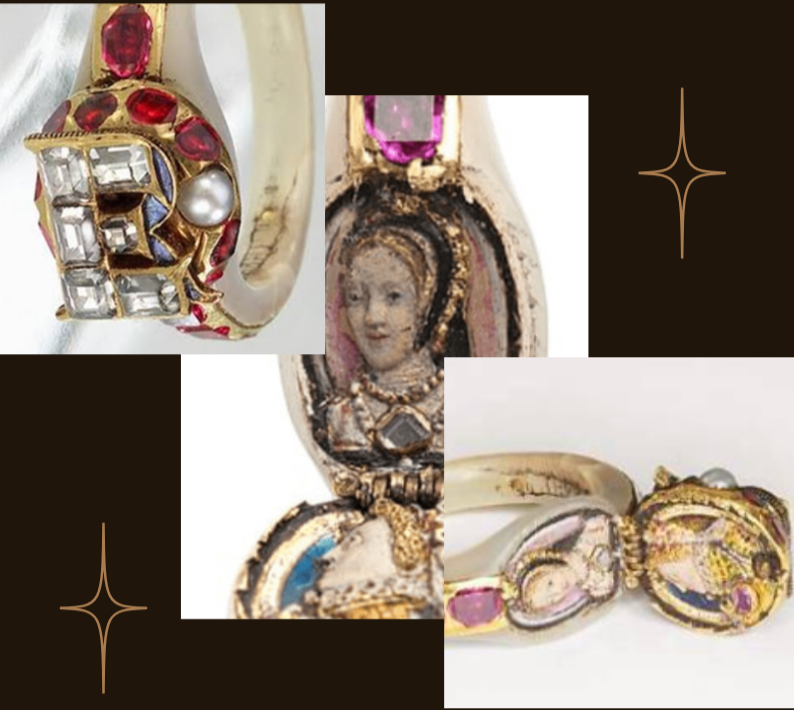
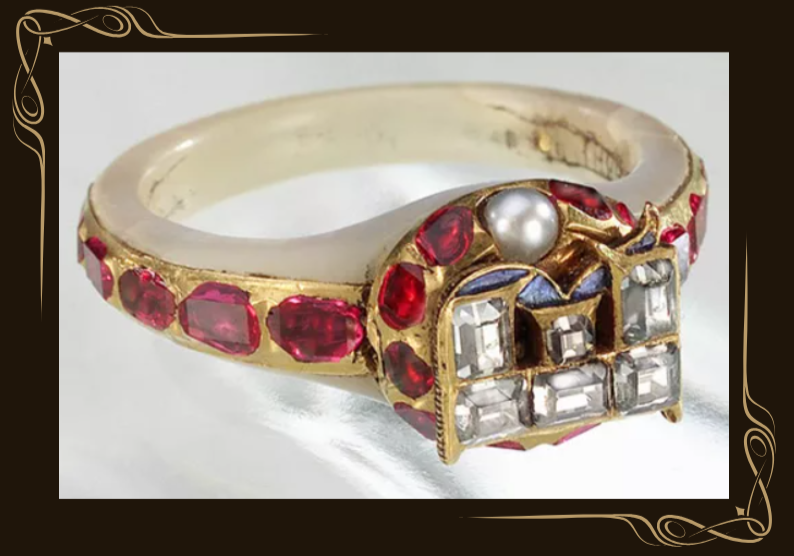
It’s no secret my love for history and ancient relics knows no bounds. It’s difficult to narrow down my favorites (there’s SO many!) but if I were to be truthful: My absolute favorite piece of historical jewelry is this tiny, intricate ring worn by Queen Elizabeth the 1st. Called the Chequers’ Ring. It was a treasured item in her collection and has survived over 450 years.
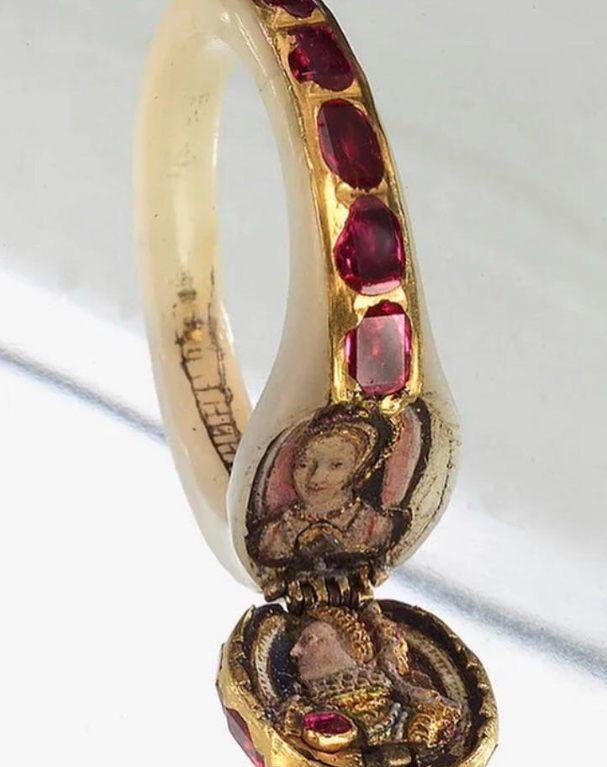
The craftsmanship is nothing short of incredible, the enameled cameos practically microscopic. Every time I think of it, I wonder HOW did these goldsmiths achieve this without modern technology like microscopes and electricity?!?
However (like any piece of jewelry) the most fascinating part about this is the story and meaning behind it.
Anne Boleyn
The name alone evokes many meanings: Mother, Whore, Witch, Martyr, Traitor, Victim. The ill-fated wife of Henry VIII, was beheaded on trumped-up charges of adultery. Her fate was sealed, in part, by her failure to produce a male heir. Her daughter, the future Queen Elizabeth I, was just two years old when her mother was executed.
My fascination with Anne Boleyn began at twelve, when I came across a book about Anne and Elizabeth in my school library. I vividly remember imagining Anne, young Elizabeth in her arms, pleading with Henry for one more chance (this actually happened). And so began my lifelong obsession with Anne Boleyn, Elizabeth I, and, coincidentally, the Tudors.
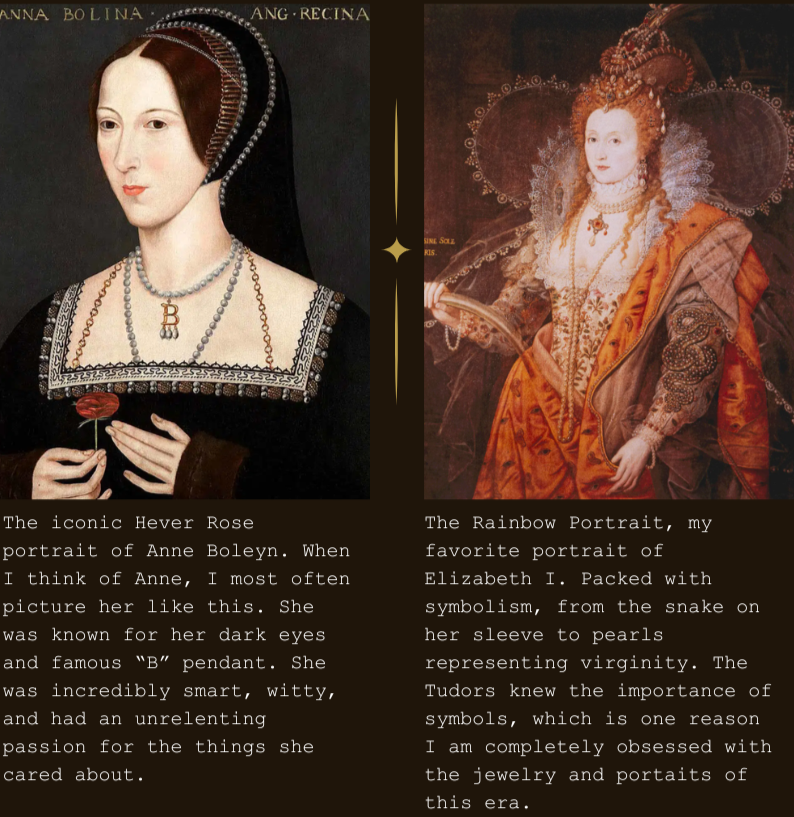
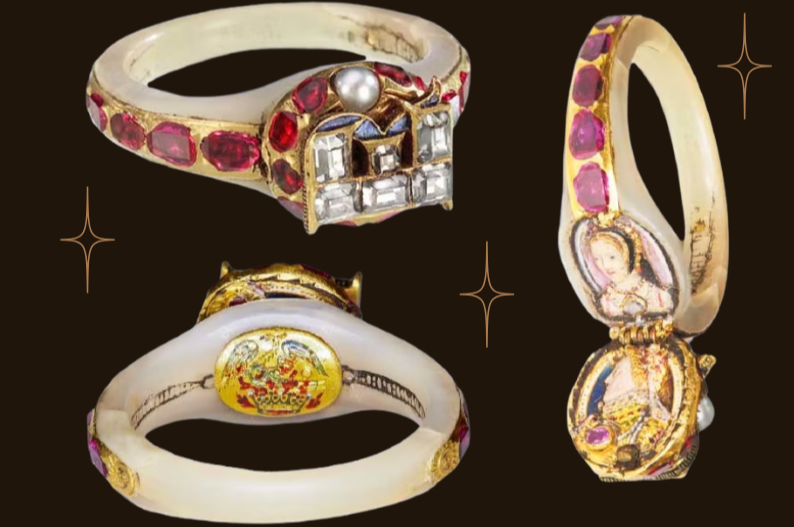
Most historians agree that the woman depicted inside the locket, wearing the French hood is Anne Boleyn. As queen, Elizabeth had to navigate a precarious position and couldn’t openly express her support for her mother, so perhaps she kept her close through this deeply personal adornment. I find it rather touching that, though she didn’t know her mother, she chose to honor and carry her memory though adornment.
The Phoenix, inlayed on the underside of the shank, most likely represents Elizabeth, rising from her mother’s ashes. Read more about this fascinating piece of history from my favorite Historians on The Tudor Travel Guide.